

I first wrote this article in 2021. Back then, the most common way to reset a Facebook password without email and phone number was to ask “trusted contacts” for help. Facebook has since removed that feature, so I updated this article based on the official recovery process in the Facebook Help Center (10/2026). If you still have your phone number or Gmail, resetting your password is much easier, so feel free to skip to those sections below.
Reset Facebook password without email and phone number
Forgetting which email you used can happen, but with phone numbers, I think most problems come from Facebook not sending the code. Few people lose access to both. If you really can no longer access either your email or your phone number, Facebook still has an official recovery process, but the result depends on whether Facebook can confirm that you own the account.
Note: The old version of this article explained how to get recovery codes from trusted contacts through facebook.com/recover. Around 2022, Facebook announced it was ending this feature, and the current account recovery help pages no longer mention it. So I removed that part to save you from looking for an option that no longer exists.
What to prepare
- A device you have used before: Facebook recommends recovering your account on a phone or computer you have previously used to log in. Facebook recognizes familiar devices and locations, which makes it easier to confirm it is you.
- Information to find your account: an email, an old phone number, your account name or your username. If you don’t remember your username, ask a friend to open your profile and check the URL.
- A new email or phone number: one that has never been used on a Facebook account, so Facebook can contact you during recovery.
- Clear photos of your face on the account: depending on your region and account, Facebook may offer a video selfie to compare with photos on your account. If your account has no clear photos of you, this option is hard to use.
Steps
Step 1: Open the account search page. Go to the Facebook login page and click Forgot password, or open facebook.com/login/identify directly.
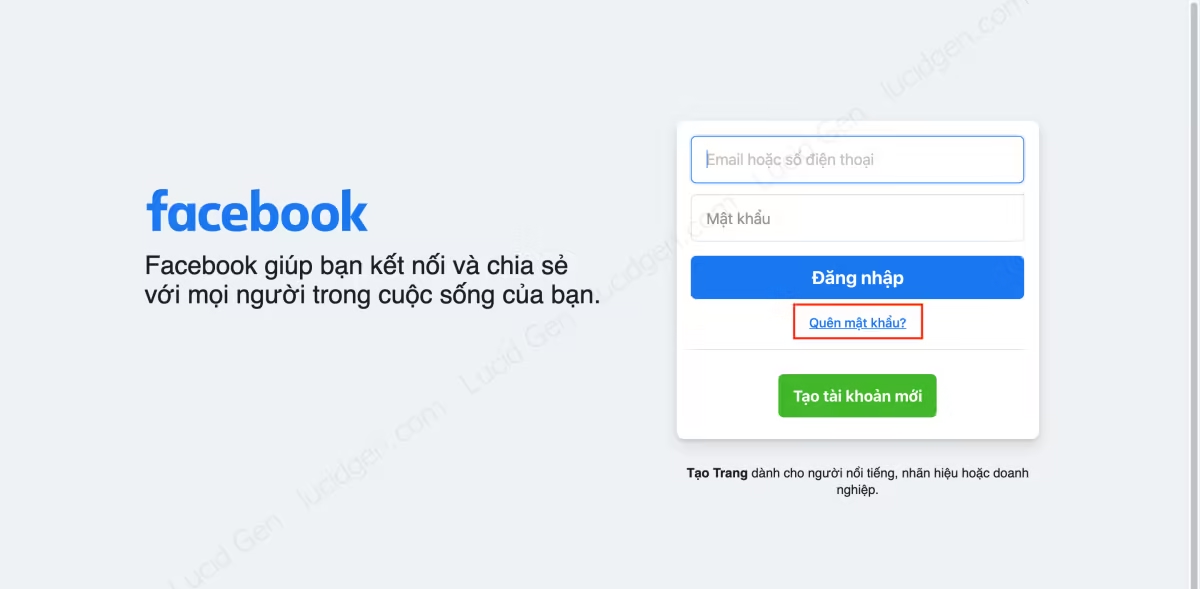
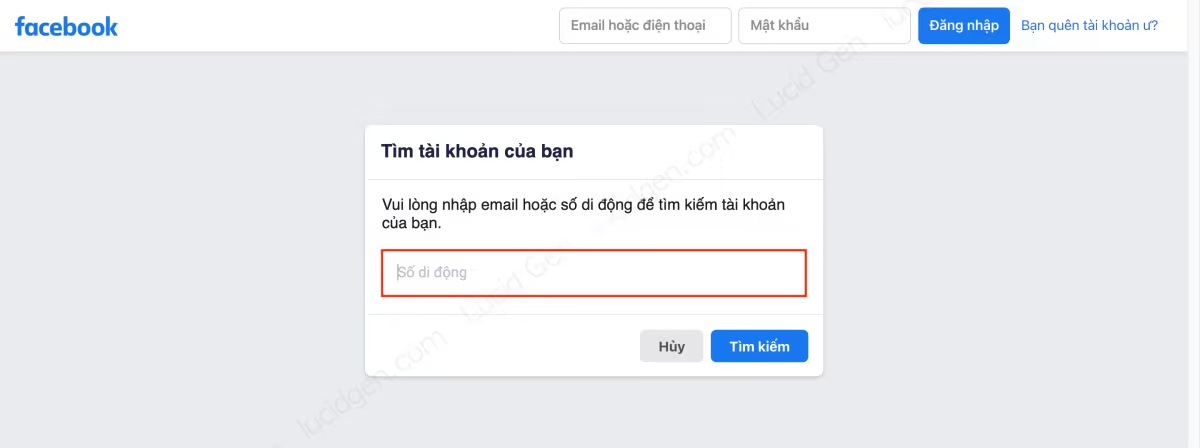
Step 2: Find your account. Enter any email or phone number that might be linked to your account, even ones you are not sure about. If that doesn’t work, try your account name or username.
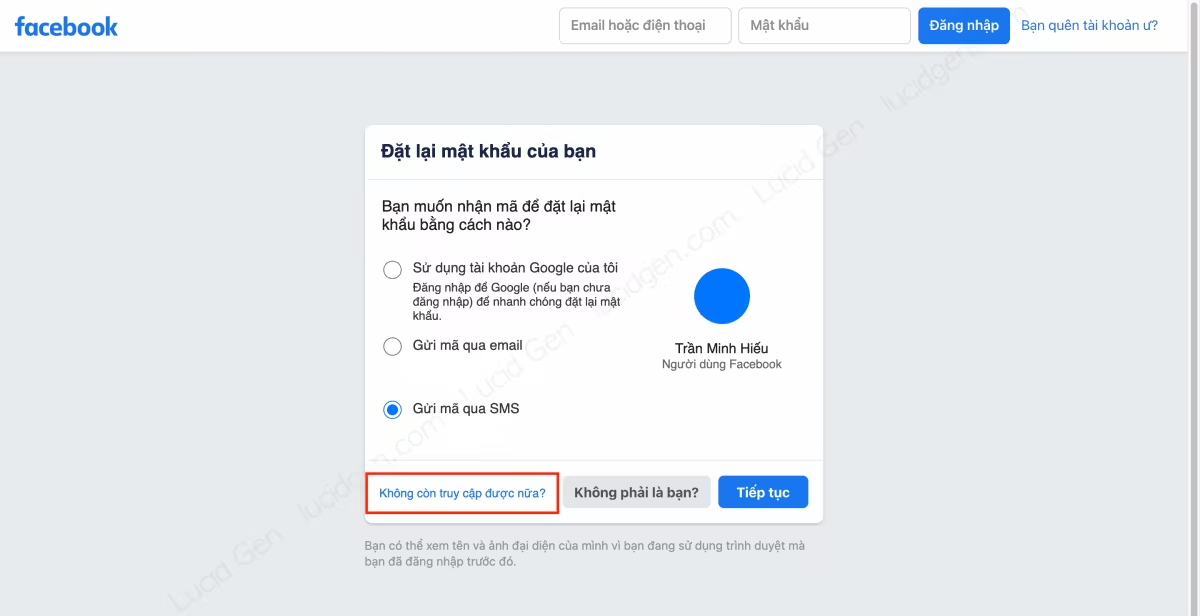
Step 3: Select No longer have access to these?. Depending on the interface, you may see “Forgot account?” or “Recover” instead. The options above it are for resetting your password with your phone number or email.
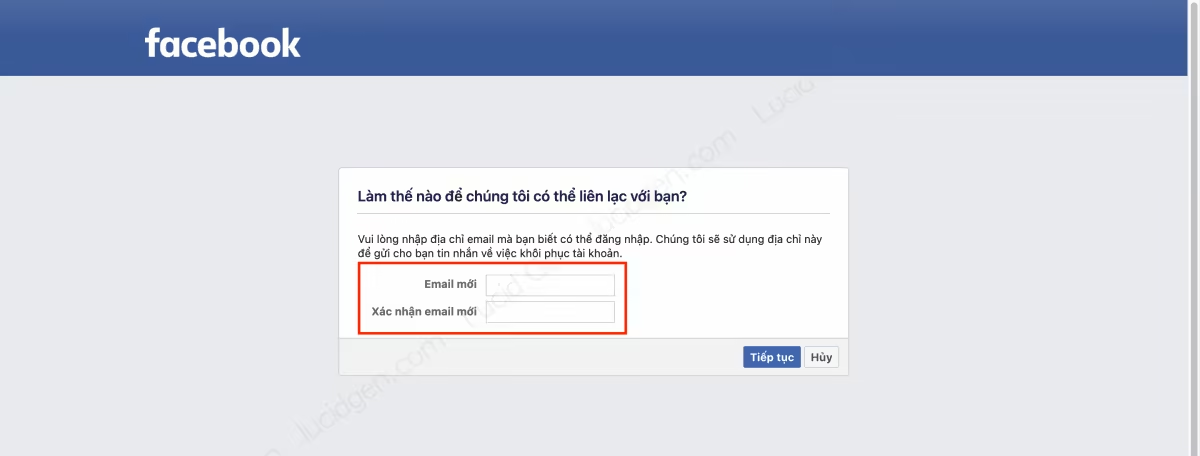
Step 4: Enter new contact information. Use an email or phone number that has never been used on Facebook. I recommend Gmail, because later you can reset your Facebook password with Gmail very easily (instructions below).
Step 5: Confirm your identity as Facebook asks. Depending on your case, Facebook may ask you to confirm your date of birth, answer security questions, record a video selfie or upload a photo of your ID. Follow the instructions on screen. If Facebook needs time to review, it will reply to the new email or phone number you entered.
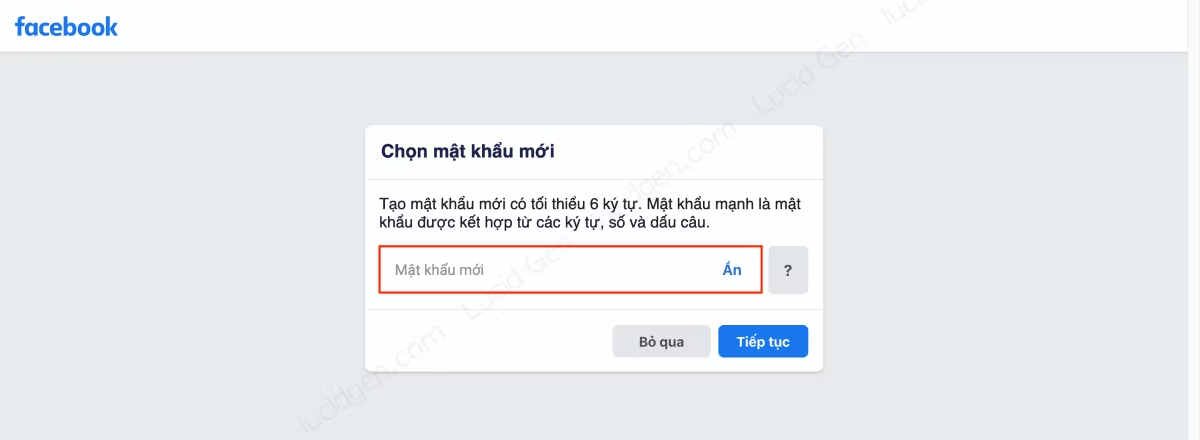
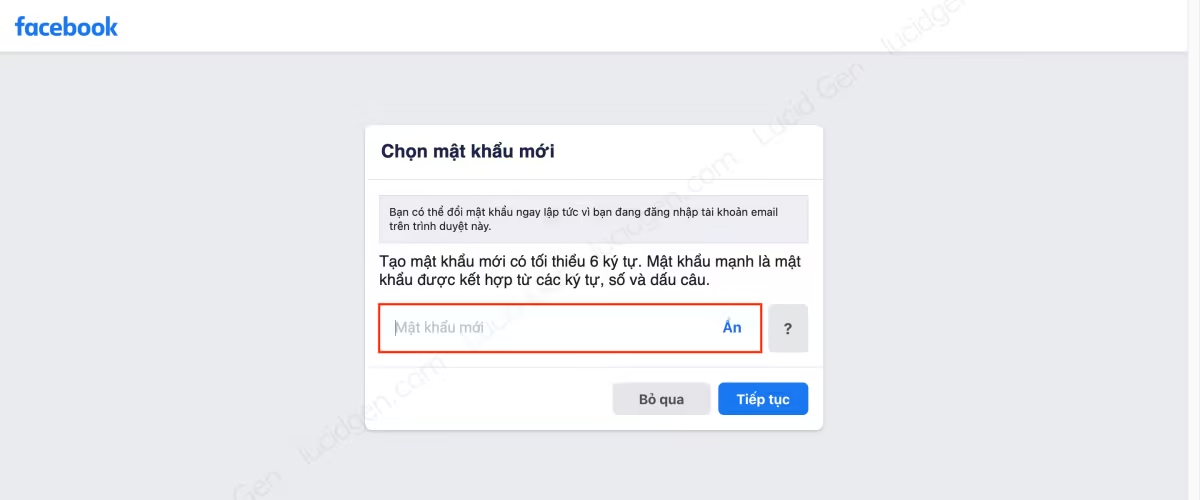
Step 6: Set a new password. Once you are verified, enter a new password for your Facebook account.
Passwords should be a combination of lowercase letters, uppercase letters, numbers, and special characters to keep your Facebook secure. The password length recommended by many security tools is at least 20 characters.
If your account was hacked
If you think someone took over your account and changed the email and phone number, go to facebook.com/hacked on a device you have used to log in before. Facebook recommends this link even if you are not sure your account was hacked, because it guides you through the right security and recovery steps.
To be honest, this process does not always work, especially when the account has no clear photos of you or you no longer have your old device. Also, don’t trust “Facebook account recovery services” advertised online. Facebook only recovers accounts through its own official pages, and these services are often scams to take your money or your information. The safest approach is still keeping your phone number and email up to date, which I cover at the end of this article.
Reset Facebook password with phone number
This is the most common method because you can reset your Facebook password without email, and it works on both phones and computers. The screenshots in this section and the email section are from 2021, so button names may look slightly different now, but the steps are similar.
How to do it on the phone
Step 1: Open the Facebook app and tap Forgot Password. Then enter your phone number or email to find your Facebook account.
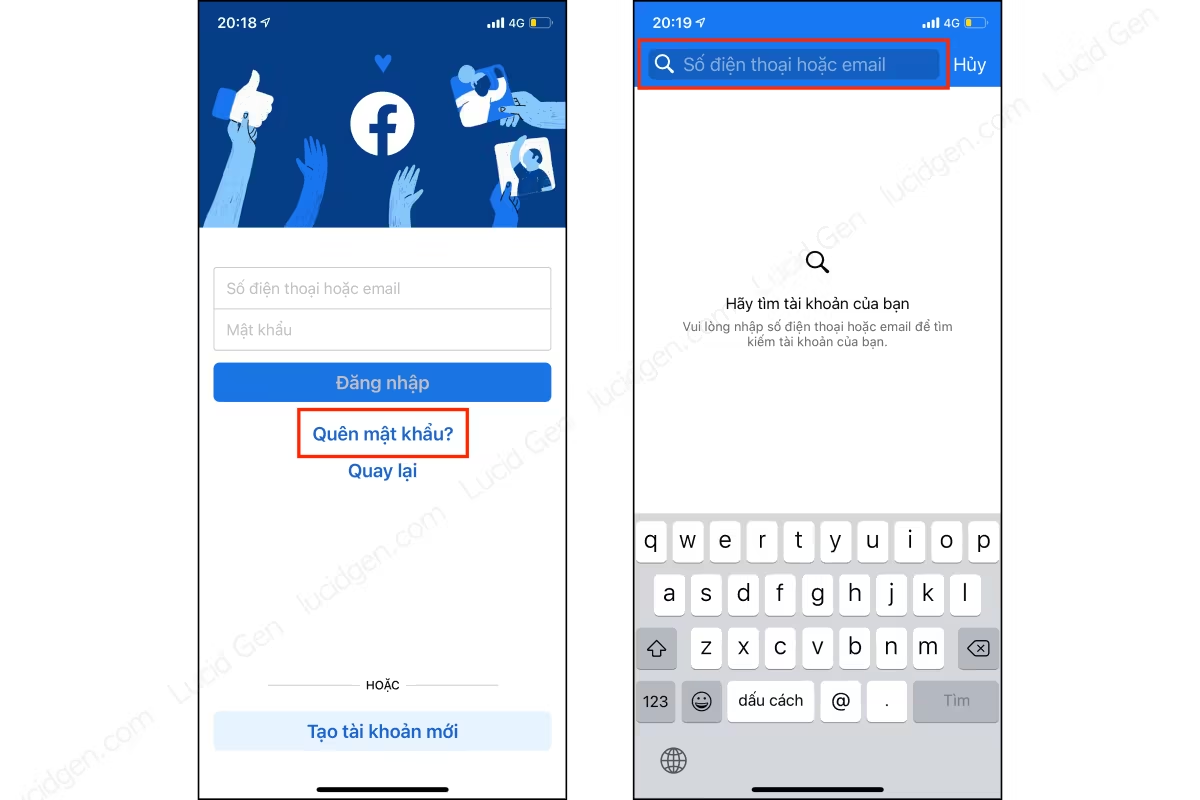
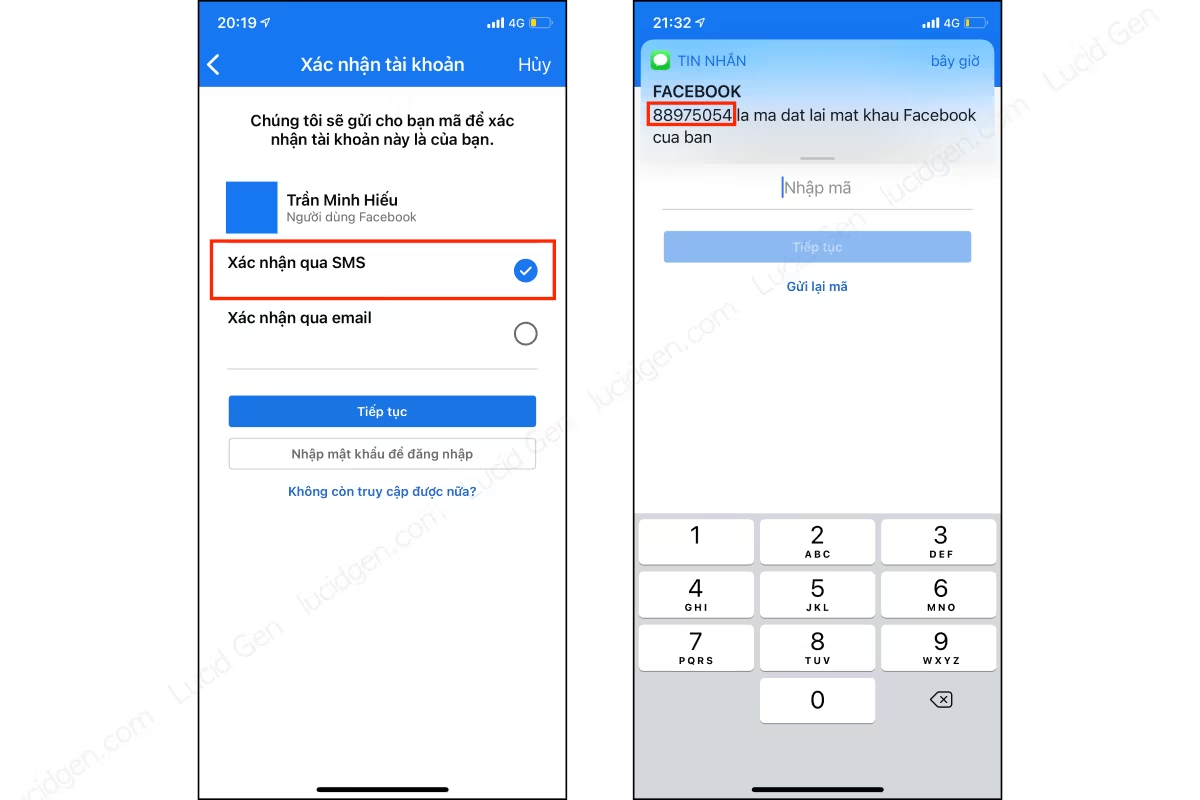
Step 2: Once you’ve found the right account, select Confirm via SMS. You’ll receive a text message with a password reset code (it usually takes about 1 minute; if you’ve waited too long and still don’t see it, tap Resend Code). Enter the code and tap Continue.
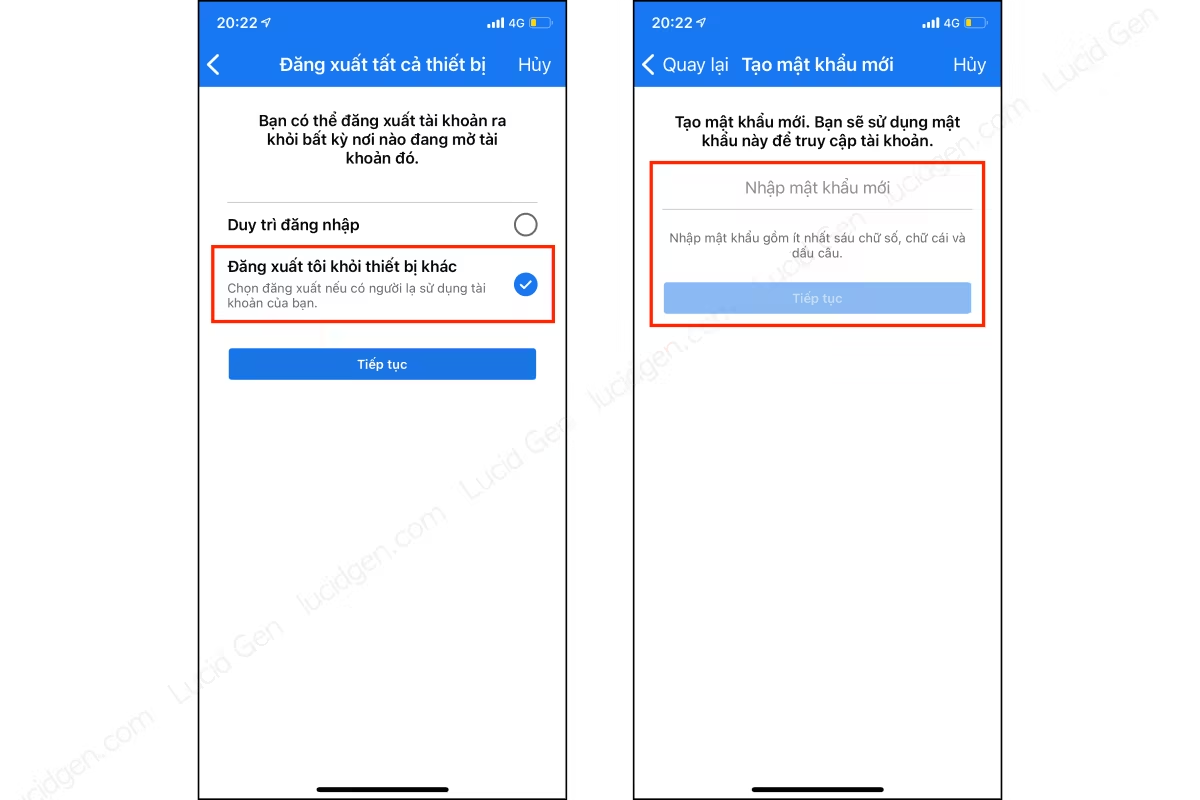
Step 3: Choose Log me out of other devices to stay safe. Then set a new Facebook password, and you’re done.
How to do it on a computer
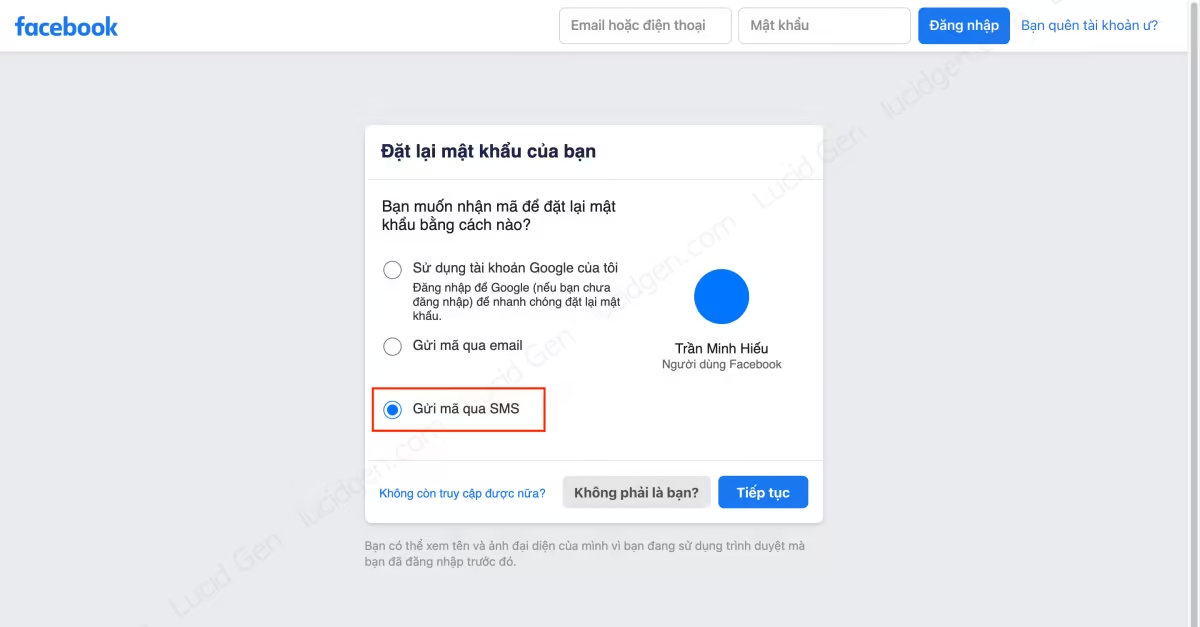
Step 1: Go to Facebook > Forgot Password > find your account, as in steps 1 and 2 at the beginning of this article. When asked how you want to reset your password, select Send code via SMS.
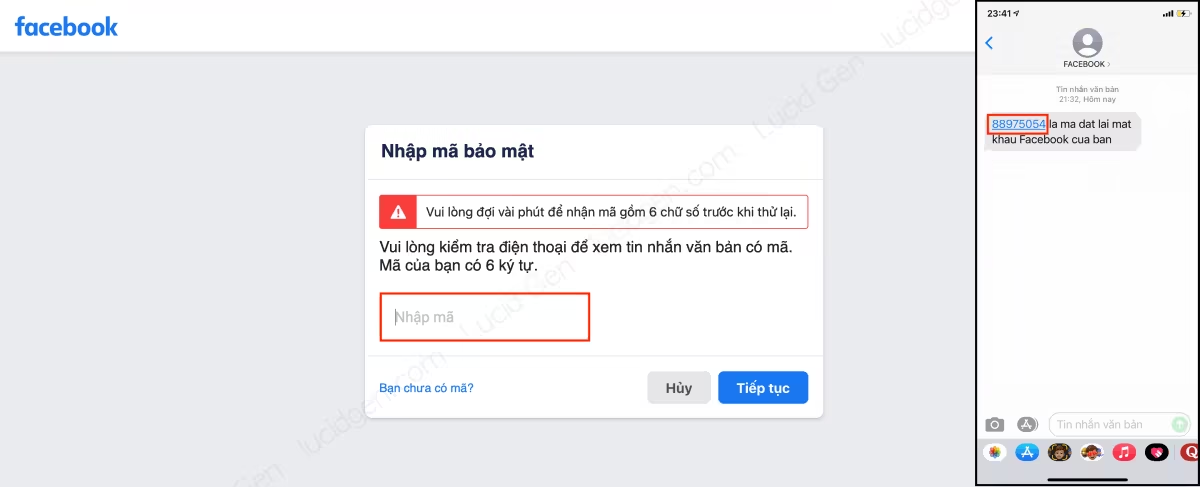
Step 2: Enter the reset code from the text message and click Continue. If you’ve waited more than 5 minutes and still haven’t received it, click “Didn’t get a code?” to have Facebook send it again.
Step 3: Set a new Facebook password and click Continue to finish. Make it as long as you can for security, but still easy for you to remember.
Reset Facebook password with email
If you’ve lost your phone number, you can reset your Facebook password with Gmail instead. This works on both phone and computer.
How to do it on the phone
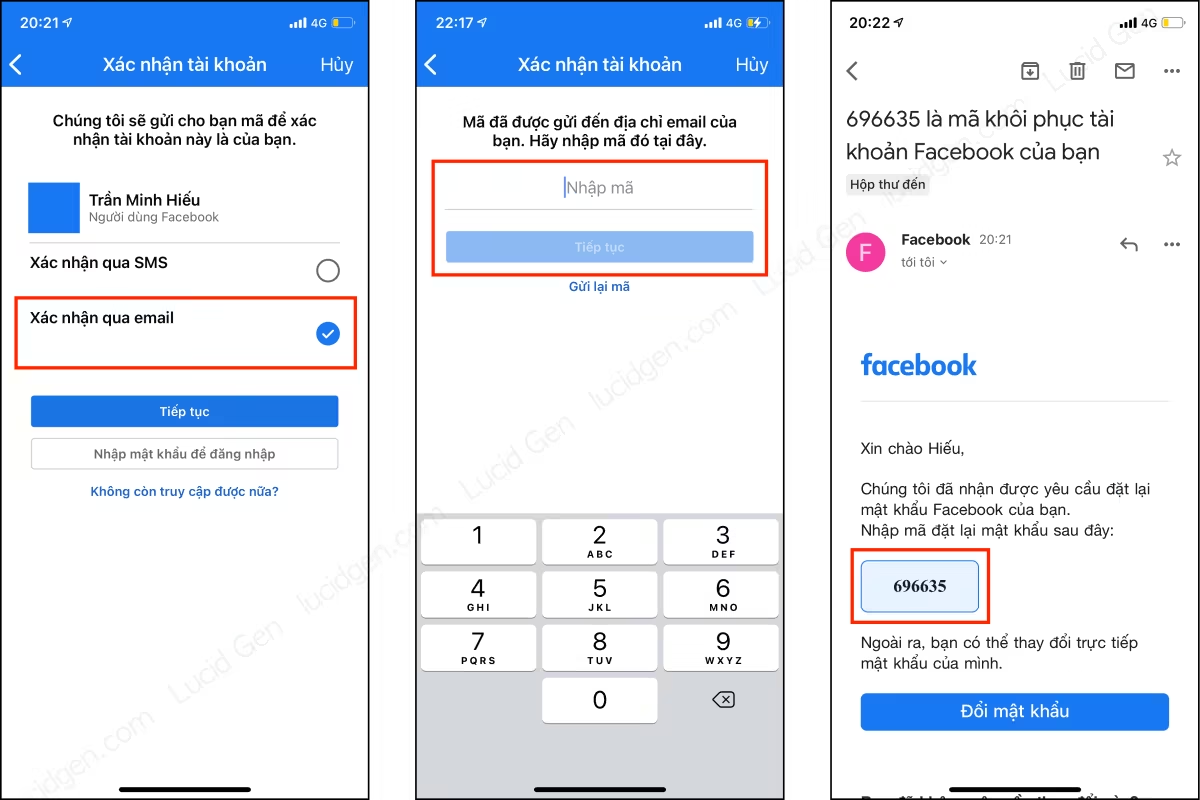
Step 1: Open the Facebook app > Forgot Password > find your account, as in step 1 of the phone number method. This time, choose Confirm via email. Then enter the reset code from the email and tap Continue.
When you reset your password with email, the email usually arrives right away. It’s rare to wait forever for it, as can happen with text messages.
Step 2: Choose Log me out of other devices to keep your account safe, then set a new password, and you’re done.
How to do it on a computer
On a computer, there are 2 ways to reset your Facebook password with Gmail. The first is to enter the code Facebook sends to your Gmail. The second only requires that you’re logged in to Gmail in your browser.
Method 1
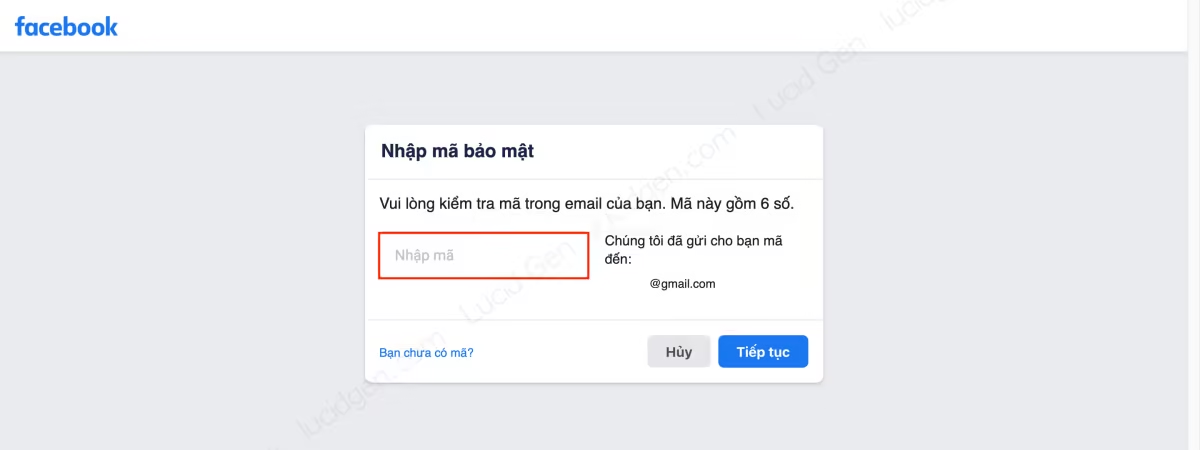
Step 1: Follow the same steps as in the sections above. When asked how to reset your password, select Send code via email.
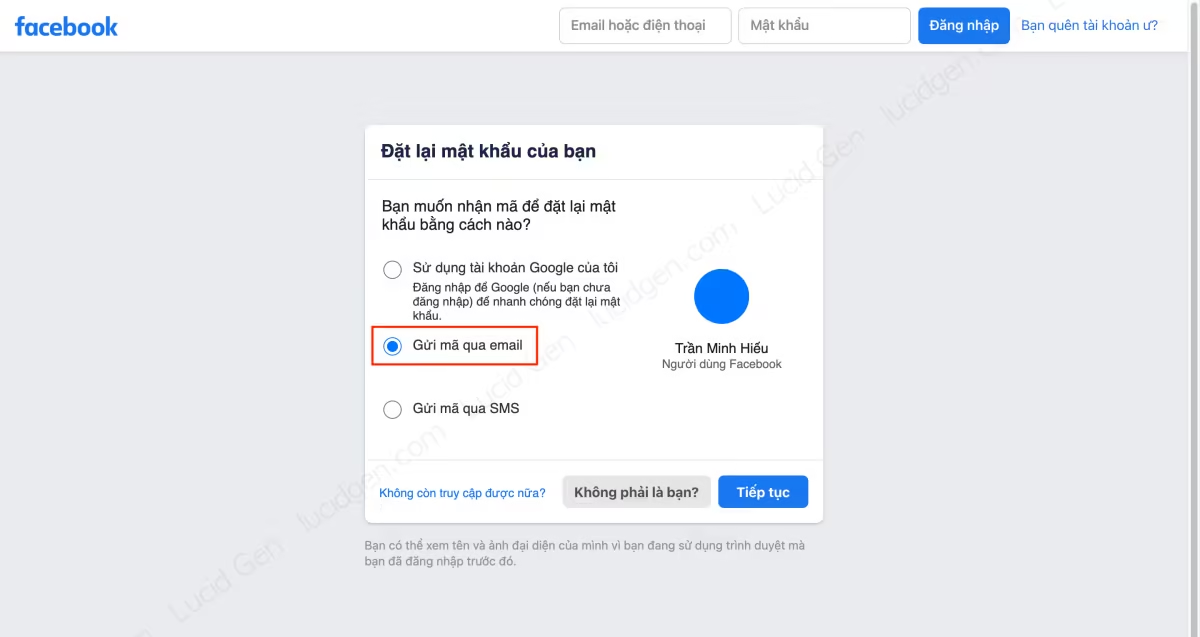
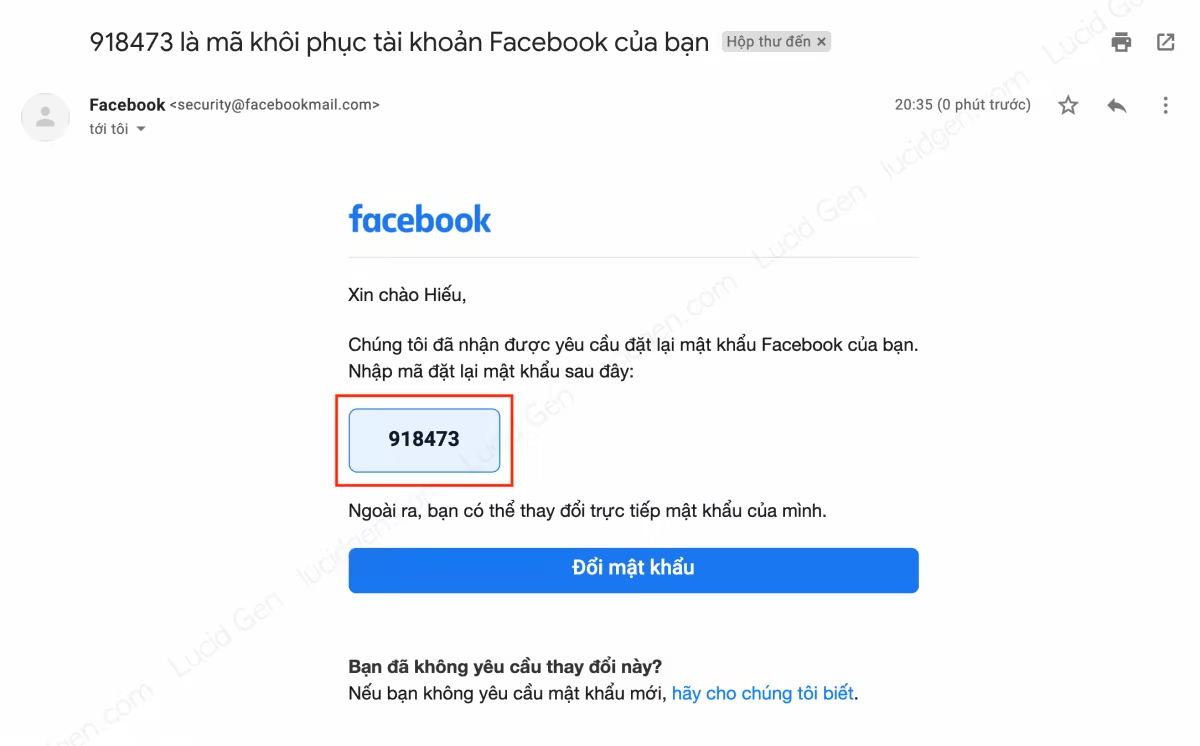
Step 2: Enter the reset code Facebook sent to your Gmail and click Continue.
The email with the Facebook password reset code looks like this.
Step 3: Create a new Facebook password, and you’re done.
Method 2
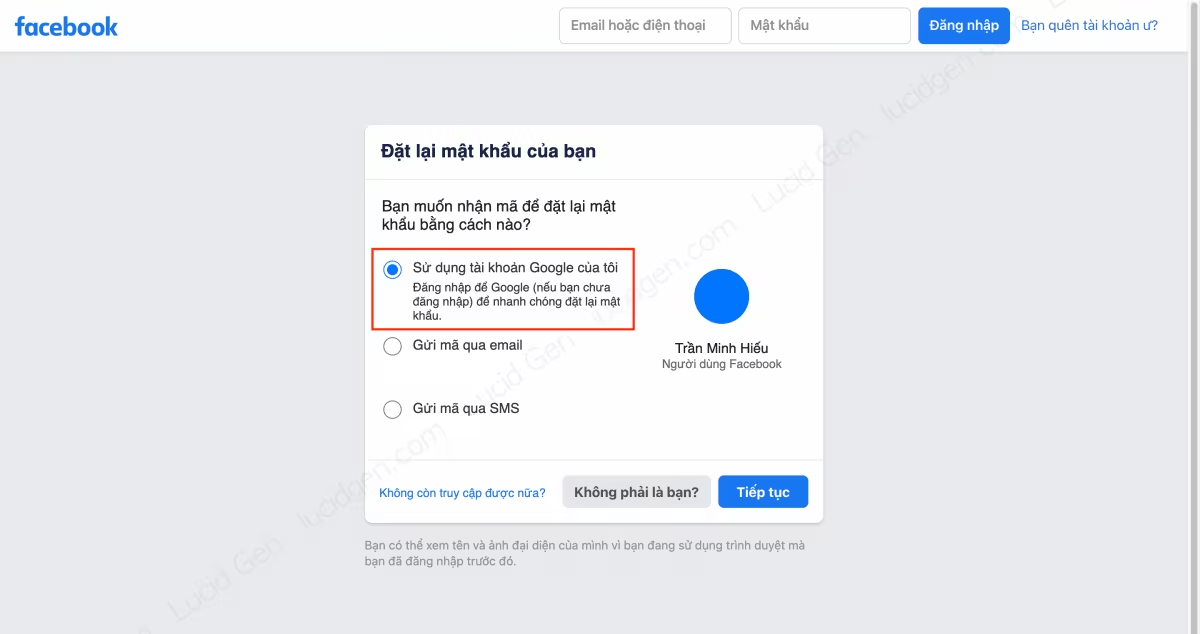
Step 1: To reset your Facebook password with Gmail without entering a code, select “Use my Google account” and click Continue. You need to be logged in to Gmail in your browser first.
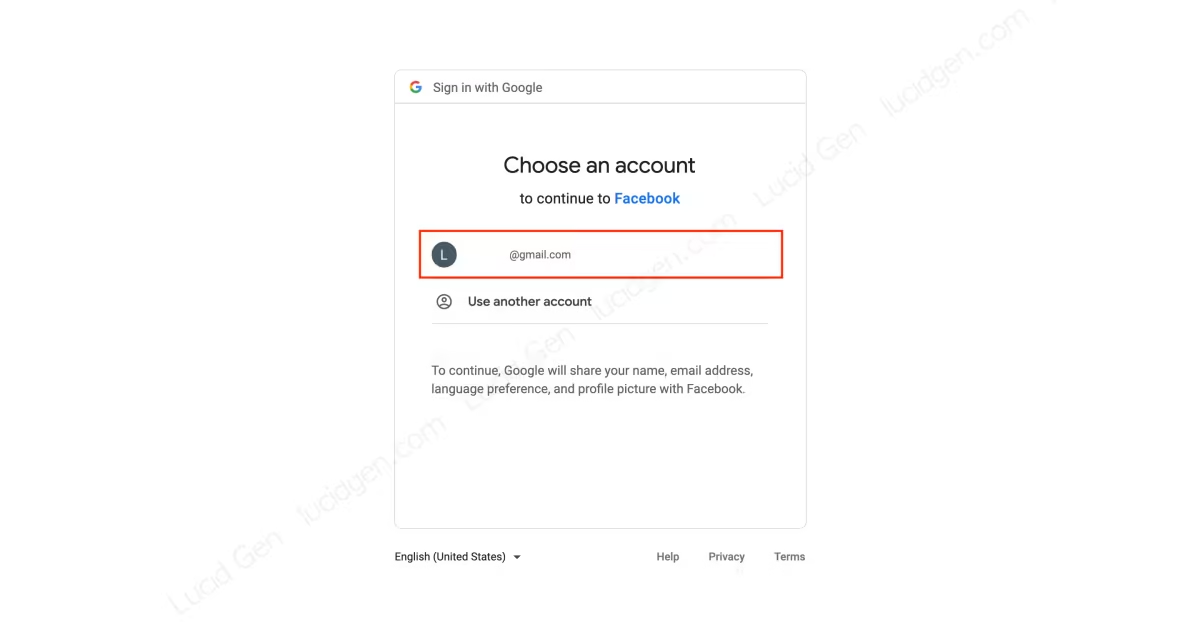
Step 2: You’ll be taken to a page listing the Gmail accounts signed in to your browser. Choose the Gmail you used to sign up for Facebook or saved in your account information.
Step 3: If you chose the right Gmail, Facebook will show an Email Verified message. Click OK.
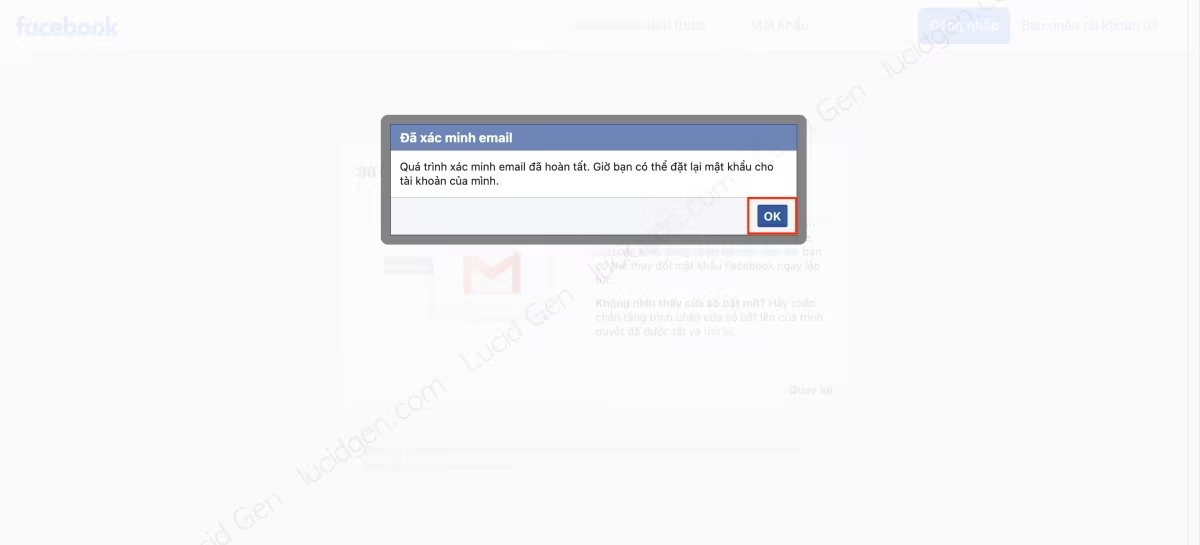
Step 4: Set a new Facebook password to finish. Check the password tips above to create a strong one.
How to protect your Facebook account
- Don’t give access to untrusted third parties.
If you often play games or use apps through Facebook, go to Settings, then Apps and websites, and remove the ones you no longer use. If you spot any apps you don’t trust, remove them too. - Check your contact info in Accounts Center.
I used to recommend adding trusted contacts, but that feature is gone. Instead, go to Settings > Accounts Center > Personal details > Contact info (10/2026) to check that your email and phone number still work, and consider adding a backup email. If you can still log in to Facebook, do this soon. - Don’t save passwords in your browser.
Saving passwords in the browser saves you from typing them every time you log in, but you should only do it for accounts that don’t matter much. When someone borrows your computer, they can easily see your Facebook password in the browser’s saved passwords. And if your computer gets a virus, it can attack your browser and steal your information. - Don’t log in to sites that look like Facebook but aren’t facebook.com.
Avoid opening links shared by fake (clone) accounts on Facebook. They often contain malware, or they imitate the Facebook interface and ask you to log in to keep viewing. If you enter your real Facebook login there, they’ll take over your account. - Protect the phone number and Gmail you used to sign up for Facebook.
If you switch to a new phone number, update your Facebook account right away. For Gmail, turn on 2-Step Verification. With these two in place, resetting your Facebook password is much easier. - Turn on two-factor authentication for Facebook.
All major social networks, including Facebook, offer this feature, so turn on two-factor authentication for Facebook. And while you’re at it, don’t forget to turn on two-factor authentication for Instagram too, since the two accounts are linked. - Think twice before sharing your Facebook password.
If it’s your personal account, don’t share it with your partner. In my experience, that rarely ends well. For business, everyone works differently, and many people sell more effectively through a personal account than a fan page. If you really have to share an account with your team, only share it with people you truly trust. - Don’t install unknown browser extensions.
Browser extensions can boost your productivity a lot, but only install well-known ones, such as Google Translate. If you use Facebook tool extensions, be careful: only install extensions from known sources and change your password more often, because extensions can read the Facebook pages you have open. - Don’t accept friend requests from strangers.
When a stranger sends you a friend request, check whether their profile looks trustworthy and look in your message requests to see if they’ve written to you (customers asking to buy something often send friend requests too). If you don’t know them and they haven’t messaged you, don’t accept. It could be a fake account that wants to watch you for a while and collect information before hacking your account. - Set your phone number and email to “Only me”.
When adding a new phone number or email to your Facebook account, choose “Only me” if the option is available. These are the two things that help you recover your password, so don’t make them public.
Conclusion
Since Facebook removed trusted contacts, resetting your password without both email and phone number has become much harder, and Facebook decides whether to restore your account. So in my opinion, the most useful thing you can do is spend a few minutes checking your contact info and turning on two-factor authentication while you can still log in.
If you have any questions about resetting your Facebook password, leave a comment below and mention what you still have access to (email, phone number, old device) so I can help more easily. Good luck getting your account back!


