

Merging multiple Excel files into one and multiple CSV files into one only takes a minute once you get the hang of the steps in this article. Lucid Gen has separate instructions for each operating system (Windows and macOS). On top of that, I’ve added a bonus trick to help you total your numbers by row and column labels. Let’s get started!
Merge multiple Excel files into one
Follow the steps below to merge multiple Excel or CSV files into one. This method only works on Windows computers.
Step 1: Put all the Excel or CSV files into one folder like this. Remember that the folder must not contain any other types of files.

Step 2: Open Excel and click through the following.
Data > Get Data > From File > From Folder
Note: The screenshots below were taken in Excel 2016, where this menu was still called Data > New Query. In Excel for Microsoft 365 (10/2026), it is Data > Get Data, and the remaining steps are the same.
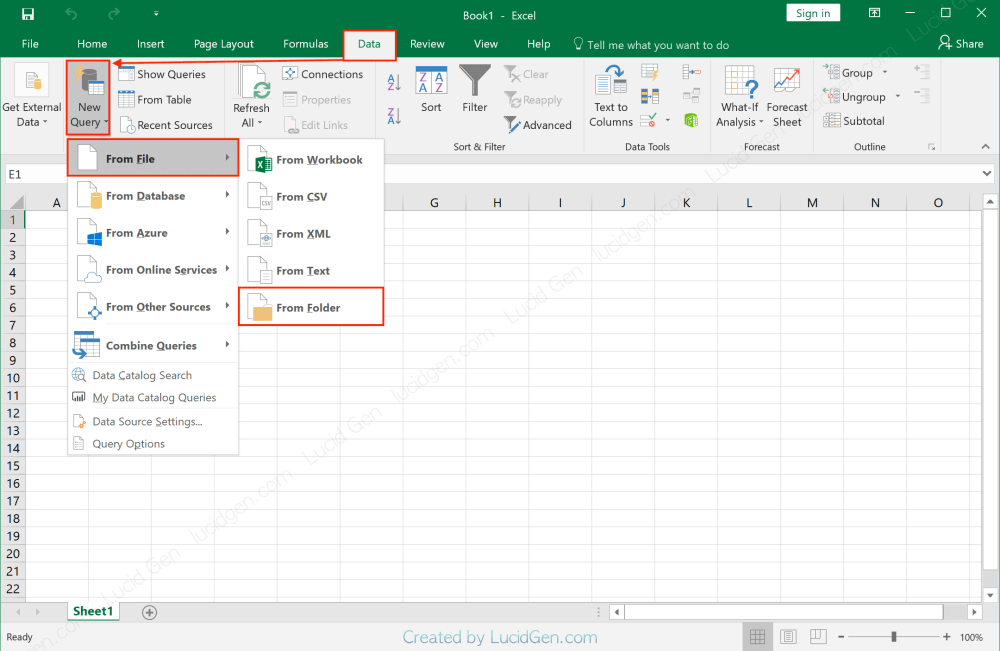
Step 3: Click Browse… and select the folder containing the Excel or CSV files you want to merge.

Step 4: Click Combine & Load.

Step 5: Click OK to merge multiple Excel files into one.

Here is the result after merging. Just close the Workbook panel on the right and delete the extra column (column A), and you’re done.

How to fix merge errors caused by hidden files in the folder:
As I mentioned in step 1, the folder must not contain any other files, or you’ll run into errors. If your folder has hidden files, you can fix it in 2 ways:
- Create a new folder and copy the files into it.
- Turn on the option to show hidden files as shown below, then delete the hidden files.
In the folder’s menu, click View and select Options.

When the Folder Options window appears, click the View tab, turn on Show hidden files, folders, and drives, then click Apply and OK.

Merge multiple CSV files into one on Mac
On Mac (macOS), this method only works for CSV files, not XLSX files. To merge CSV files, follow these steps:
Step 1: Put all the CSV files into one folder, then click the gear (Action) button in Finder and select Copy “folder name” as Pathname.

Step 2: Press Command + Space, then search for and open the built-in Terminal app.
Step 3: Type the command below into Terminal.
pwd
Step 4: Type cd and paste the folder path you copied in step 1.
cd [Path of the folder containing the files, copied earlier]
Step 5: Enter the command below into Terminal to merge the CSV files into one. You can rename lucidgen.csv to anything you like, such as yourname.csv.
cat *.csv >lucidgen.csv
Looks pretty pro, just like an IT person, right? A few commands and your CSV files are merged.

How to remove the extra header rows after merging:
Since this method merges the entire contents of each file, the header row of every file is kept. You can remove the extra header rows like this.
First, select the columns and apply a Filter (Data > Filter). Then click the Filter button on any column. It’s the small down-arrow button I circled in the image below.

When the Filter window appears, filter to show only the extra header rows, select them all by dragging along the row numbers, then right-click and delete them.
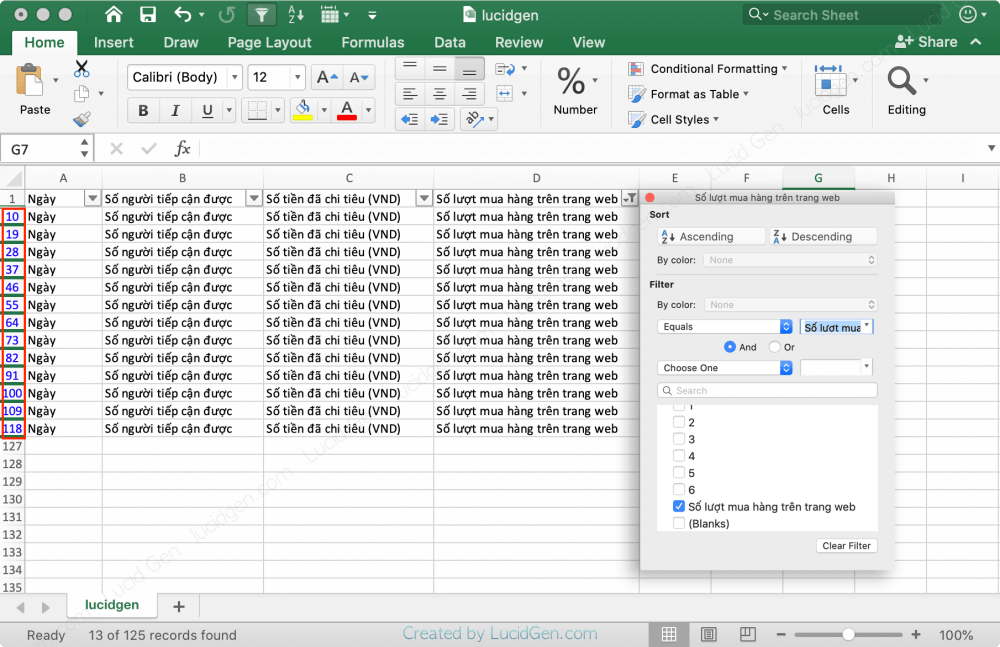
Here is the final, clean result of merging multiple CSV files on Mac.

Merge Excel and CSV files online
If you want something even simpler, you can use online tools to merge Excel and CSV files. However, if your files contain non-English text such as Vietnamese, the characters can easily get garbled.
These online tools all work the same way and only differ in their website interface, so I won’t go through them with screenshots. Just upload your files, wait for the merge to finish, then download the result.
How to combine data by column (extra bonus)
This is just a bonus, but I think some of you will need it. In this case, I run Facebook ads on multiple accounts and want to see the total numbers for each day.
For example: on 10/06/2020, 5 accounts were running Facebook ads, so I exported 5 files that all contain 10/06/2020. Now I need to add up the numbers from all 5 accounts for that day.
Step 1: After merging the Excel or CSV files, click an empty cell where the summary table should go (I chose G1), then click Data and select Consolidate.

Step 2: Tick Top row and Left column to combine by the labels at the top and on the left. In the Reference box, select the entire data range, including the headers.

Step 3: The date column won’t display in the right format, so you need to format it as Short Date.
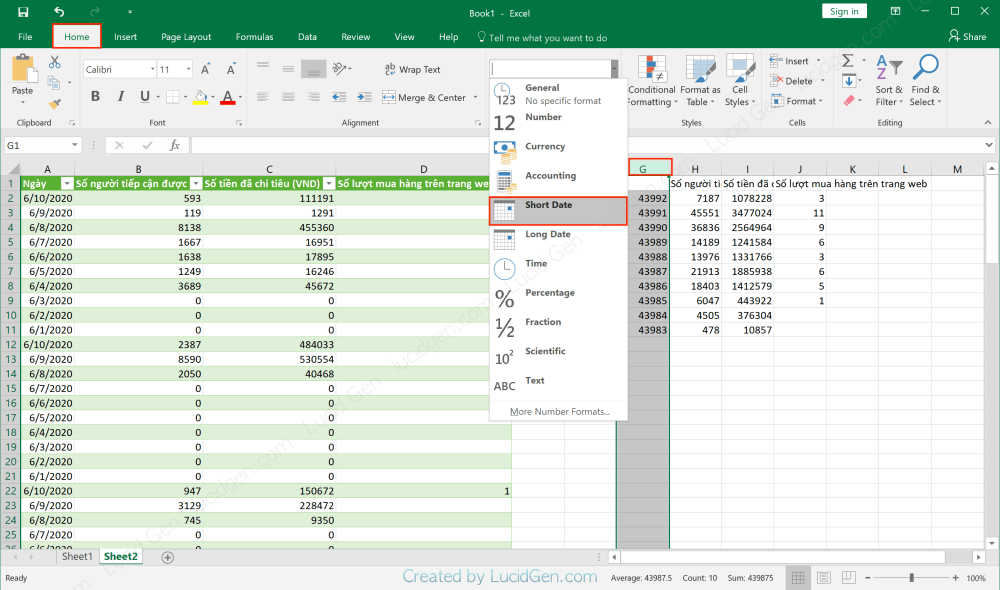
That’s it, no more typing formulas or adding up cells one by one.

Final thoughts
Whatever field you work in, if you deal with report data, I hope this article helps you a lot. We covered merging multiple Excel files into one, merging multiple CSV files into one, merging Excel and CSV files online, plus a bonus guide to totaling data by label. Did it solve your Excel problem? Feel free to ask questions in the comments below!


Cám ơn b, Trần Ngọc Minh Hiếu. Vì máy của mình không có phần New Query nên mình không làm Offline được. Cám ơn b nhiều nhé!
Không có gì Thoa ơi ^_^
Cách hợp nhất Online chỉ cho phép ghép tối đa 10 file thôi hả add. Có cách nào hợp nhất nhiều file hơn kg b? Chỉ giúp mình với nhé. Cám ơn b.
Chào Thoa, mấy trang online người ta làm vậy để không bị mất quá nhiều dung lượng tạm thời cho mỗi người dùng đó. Muốn gộp thật nhiều file thì tốt nhất nên làm Offline. Còn online bạn phải mất công làm nhiều lần thôi à.