

Making mind maps helps you develop creative and logical thinking and understand problems more clearly. You can use a mind map for many things, such as summarizing a book, making a plan, drawing a tree diagram or an organization chart… I have tried several apps and picked the one I like most that has a free version, to show you a simple way to make a beautiful, creative mind map.
Introducing XMind, a mind mapping app
XMind is one of the most popular mind mapping apps today. It’s available on common platforms such as Windows, macOS, iOS and Android, and it supports all the popular types of mind maps.
XMind’s interface is intuitive and modern. It comes with many nice free templates, and you can easily customize your mind map to your own style. XMind also lets you export to PNG and PDF, and share your mind map as a short link so you can easily share it with your community.
Free vs. paid features
XMind has 2 versions: a free one and a subscription with many advanced features. Fortunately, the free version is enough for most needs. Below is a comparison of the differences between the two versions, translated from XMind.
| Feature group | Feature | Paid | Free |
|---|---|---|---|
| Basic Features | Various structures | Yes | Yes |
| Outliner | Yes | Yes | |
| ZEN (Focus) Mode | Yes | Yes | |
| Dark theme | Yes | Yes | |
| Quick style customization | Yes | No | |
| Theme editor | Yes | No | |
| Password protection | Yes | No | |
| Insert | Labels, notes, icons | Yes | Yes |
| Attachments from computer | Yes | Yes | |
| Attachments from mobile | Yes | No | |
| Math equations (computer) | Yes | No | |
| Audio | Yes | No | |
| Images from device | Yes | No | |
| Images from mobile | Yes | No | |
| Link to a topic (Mobile) | Yes | No | |
| Import | MindManager, FreeMind, Lighten, MindNode, Markdown, OPML | Yes | Yes |
| Export | PNG | No watermark (size options 100%, 200%, 300%) | XMind watermark (100% size only) |
| No watermark | XMind watermark | ||
| Word | Yes | No | |
| Excel | Yes | No | |
| OPML | Yes | No | |
| Textbundle | Yes | No | |
| Share | XMind Link (Public, Private) | Yes | Yes |
| Social networks (Blog, Facebook, Twitter, Pinterest) | Yes | Yes | |
| Share to Evernote | Yes | Yes | |
| Share to Biggerplate | Yes | Yes | |
| Notification | No | Yes | |
| Device limit | 5 computers | 2 computers | |
| Price | Pro: 59 USD / year Premium: 99 USD / year (10/2026) | Free |
Note: I translated the table above from the 2021 version of XMind. As of 10/2026, XMind offers 3 plans: Free, Pro, and Premium. The official XMind pricing page lists Pro at 59 USD/year and Premium at 99 USD/year. Exports from the free plan still carry a watermark, while Pro and above do not. The feature list changes fairly often, so check the pricing page again before you buy.
Download the XMind mind mapping app
XMind supports all of today’s most common platforms. You can download it from XMind’s website or follow the steps below, either way works.
Windows
On Windows, check whether your system is 32-bit or 64-bit by going to Settings > System > About and looking at the System type line. Then choose the matching version to download and install.
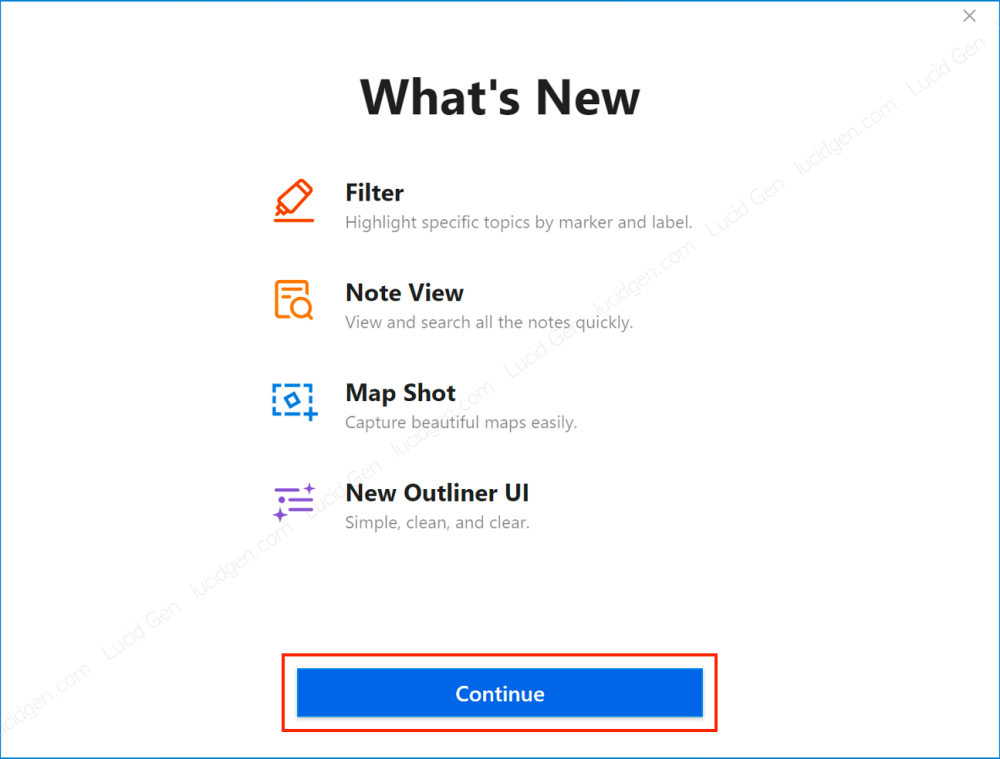
The first time you open XMind, it shows you what’s new in this version. Click the Continue button.
Next come the terms of use. Just click Agree.

At the sign-in step, you can click Skip so you can start exploring the app right away. Signing in is only useful for the paid version and for sharing short links.

macOS
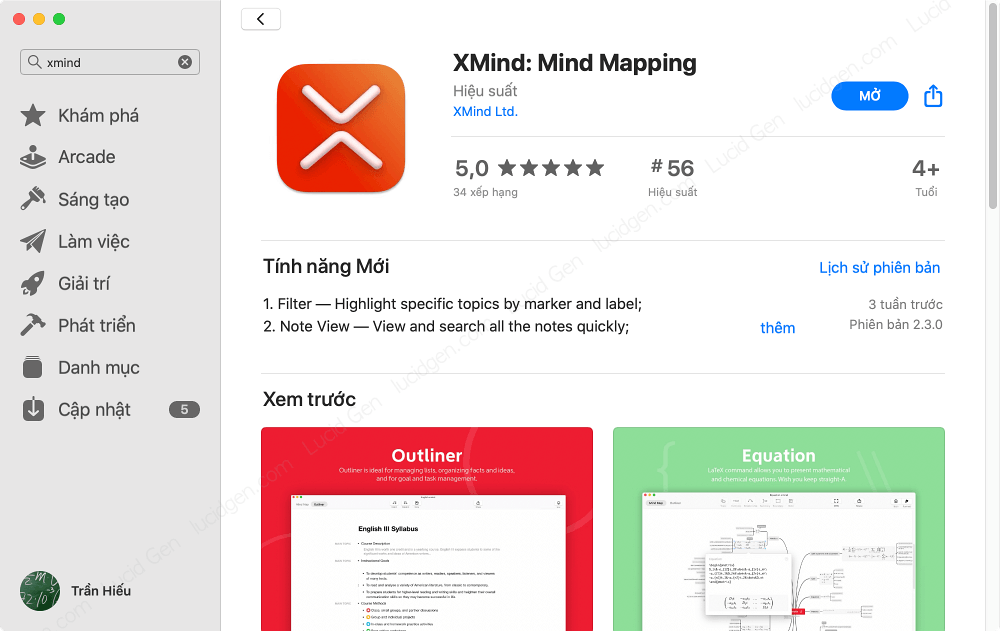
On macOS, open the App Store and search for XMind to download it. When I wrote this article (2021), it had a rating of almost 5 stars there.
Smartphone
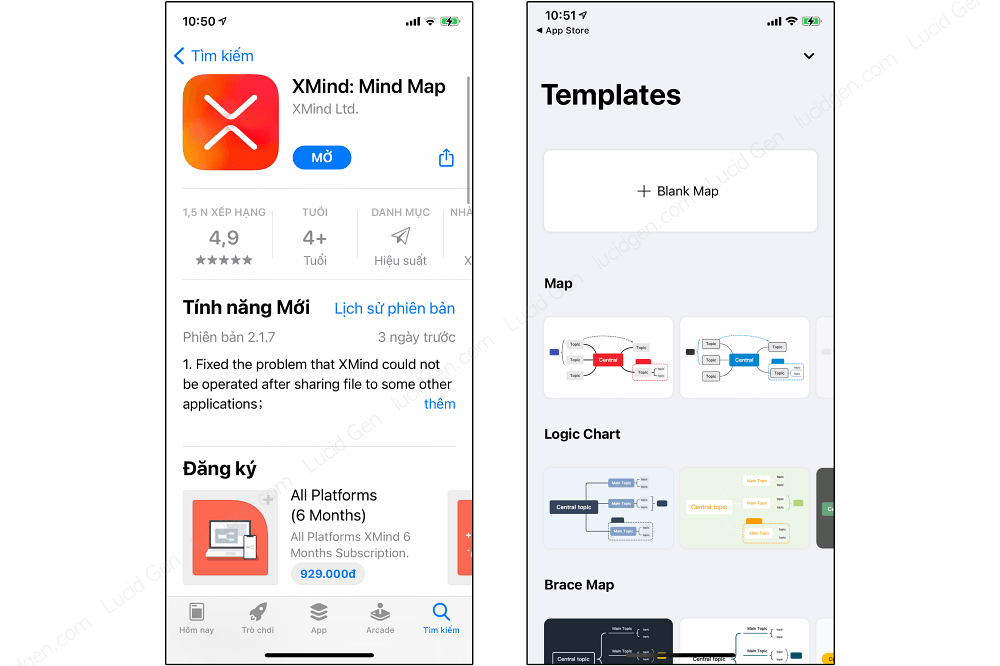
On mobile, you need to sign in and use the paid version to sync. With the free version, you sync manually by sending the XMind file from your computer to your phone and vice versa.
I’m only mentioning it briefly, because drawing mind maps on a computer makes it easier to be creative. The mobile app is handy when ideas come to you but you don’t have time to turn on your computer.
Make a beautiful, creative mind map
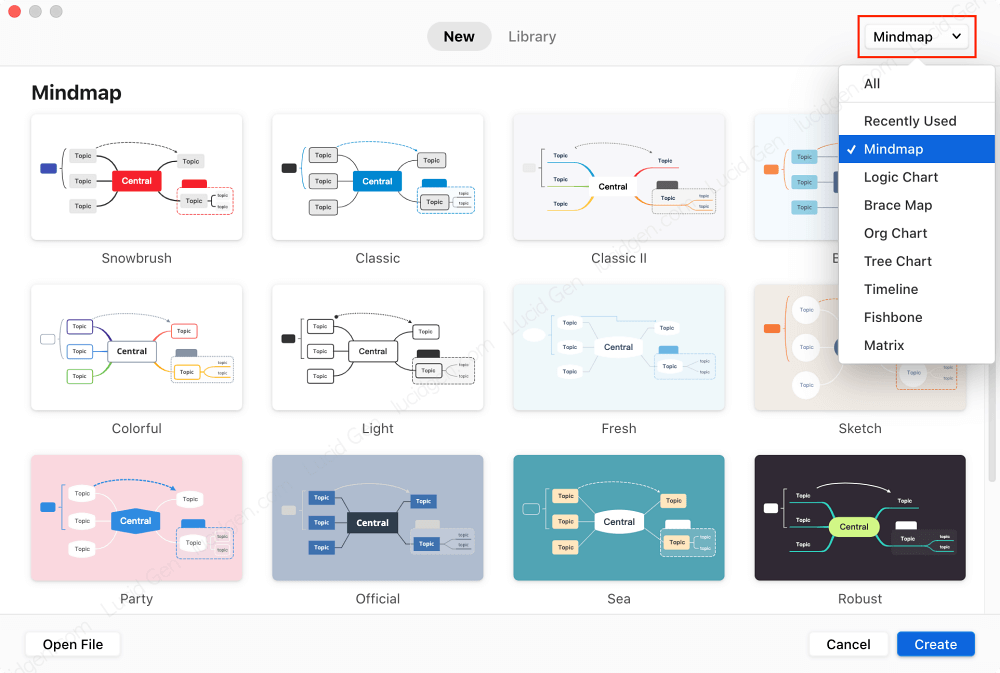
This is XMind’s start screen. There are many mind map structures and templates to choose from. For a basic mind map, use the Mindmap type.
- Mindmap: a classic creative mind map that can branch out to one side or both sides.
- Logic Chart: Branches grow in one direction from left to right, which works well for the steps of a process or cause-and-effect relationships.
- Brace Map: Uses curly braces to break a big topic into smaller parts (whole-to-part relationships).
- Org Chart: makes drawing an organization chart very simple.
- Tree Chart: a vertical tree-shaped mind map.
- Timeline: a horizontal tree-shaped mind map, or a timeline.
- Fishbone: a fishbone-shaped mind map.
- Matrix: a matrix-style mind map.
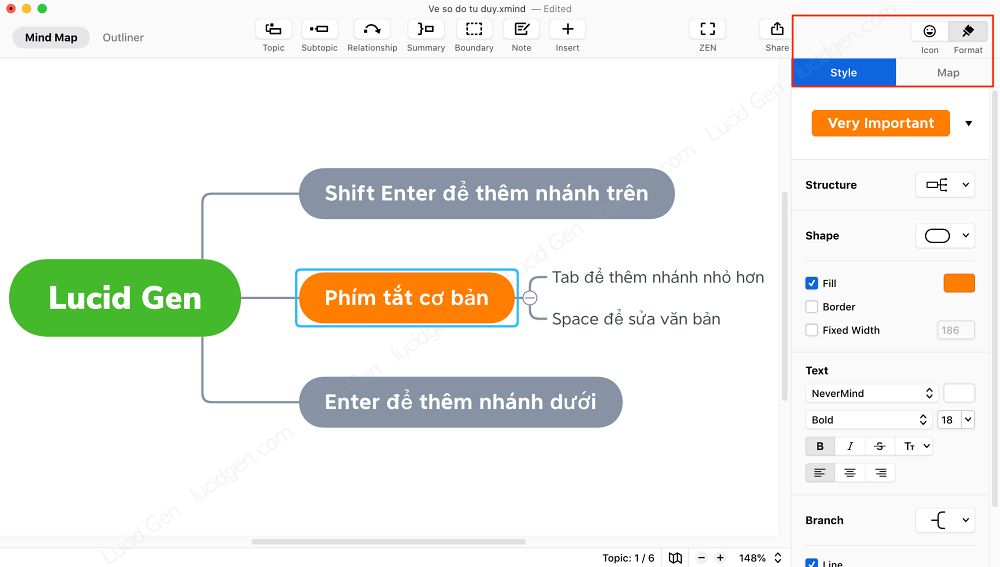
Making a mind map with XMind is quite simple. Here are the basic keyboard shortcuts:
- Enter to add a branch below.
- Shift Enter to add a branch above.
- Tab to add a sub-branch.
- Space to edit text.
To customize, open the Format panel on the right. Style lets you format each branch, while Map lets you change the template.
When you’re done, select File > Save (Ctrl S on Windows / Command S on macOS) to save the mind map as a .xmind file.
If you want others to view it without installing XMind, go to Share. If you export as PNG or PDF with the free version, the map will carry an XMind watermark. To remove the watermark, you need to upgrade to a paid plan. If you only need others to view the map, sharing it as a link as shown below is enough.
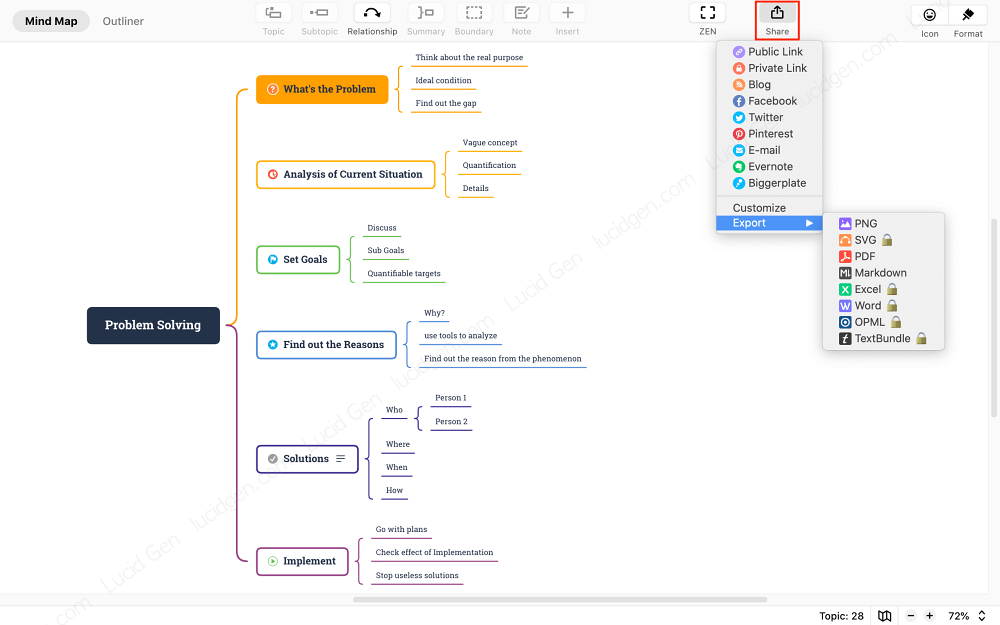
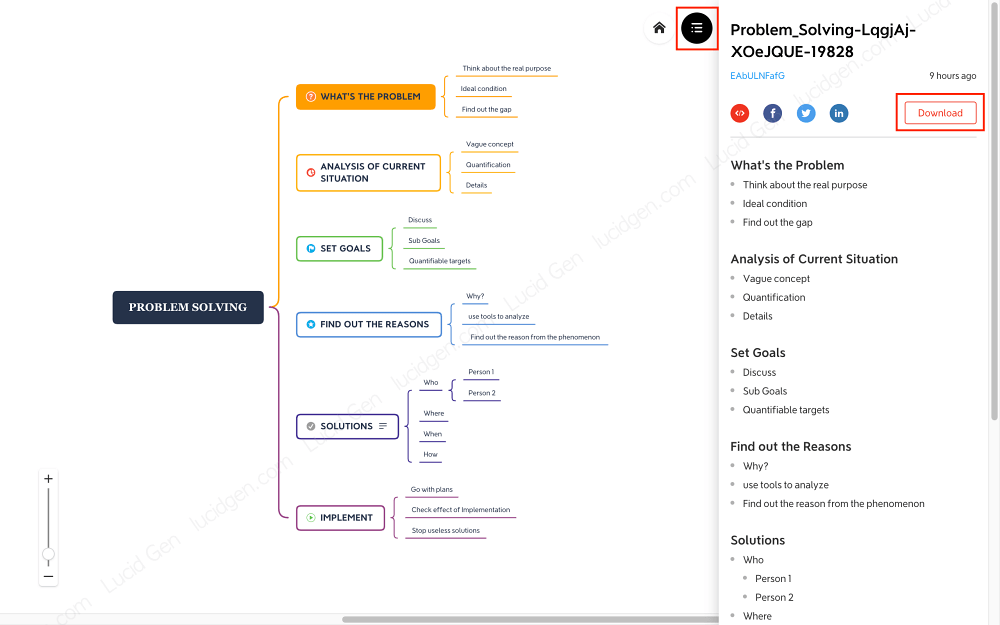
If you share it as a Public Link (the XMind community can find it) or a Private Link, you’ll get a short link like the one below to send to others so they can view your mind map. You need to sign in to do this, create an account here.

When viewing through a share link, people can drag the map around and zoom in and out easily. They can also download your mind map as a .xmind file and edit it however they like.
Make a tree-shaped mind map
To make a tree-shaped mind map in XMind, choose one of 2 diagram types: Tree Chart or Timeline.
Tree Chart gives you a vertical tree.

Timeline gives you a tree that grows horizontally. It’s great for drawing a plan timeline that looks very professional.

If you feel there are too few templates, just pick any template, then go to Format > Map and you’ll find many more templates for tree-shaped mind maps.

Make a mind map online
Personally, I think an app installed on your computer is better: it’s smoother and won’t get interrupted if your WiFi is poor. But I know some of you need to make mind maps online, so here’s how. ^_^
Step 1: The first thing you need to do is create an XMind account.
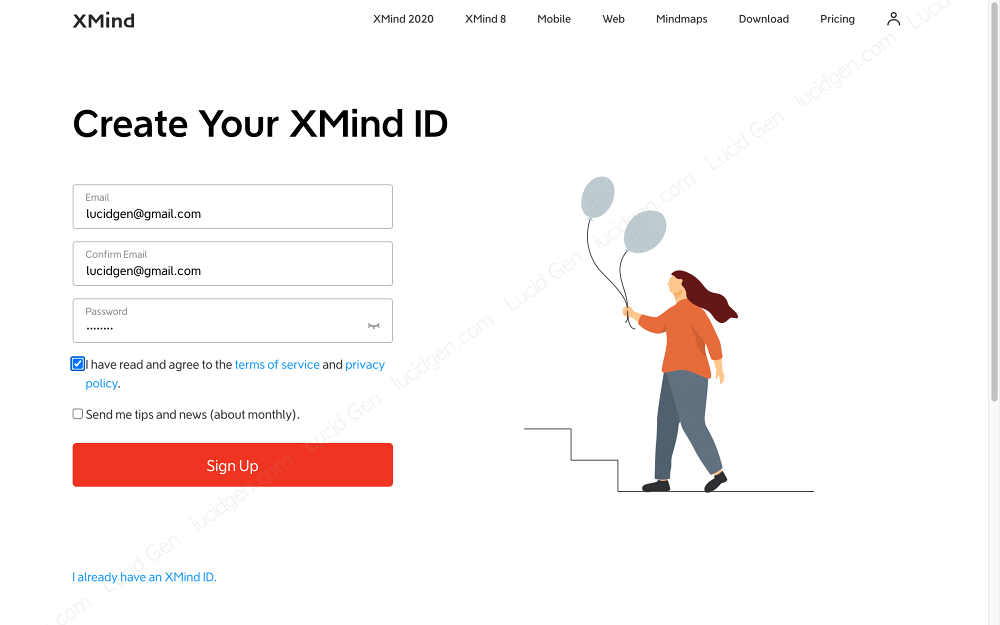
Step 2: Then sign in to XMind with the account you just created.

Step 3: The first time you use it, you need to connect a cloud storage account to save your .xmind files. I use Google Drive because it’s reliable.
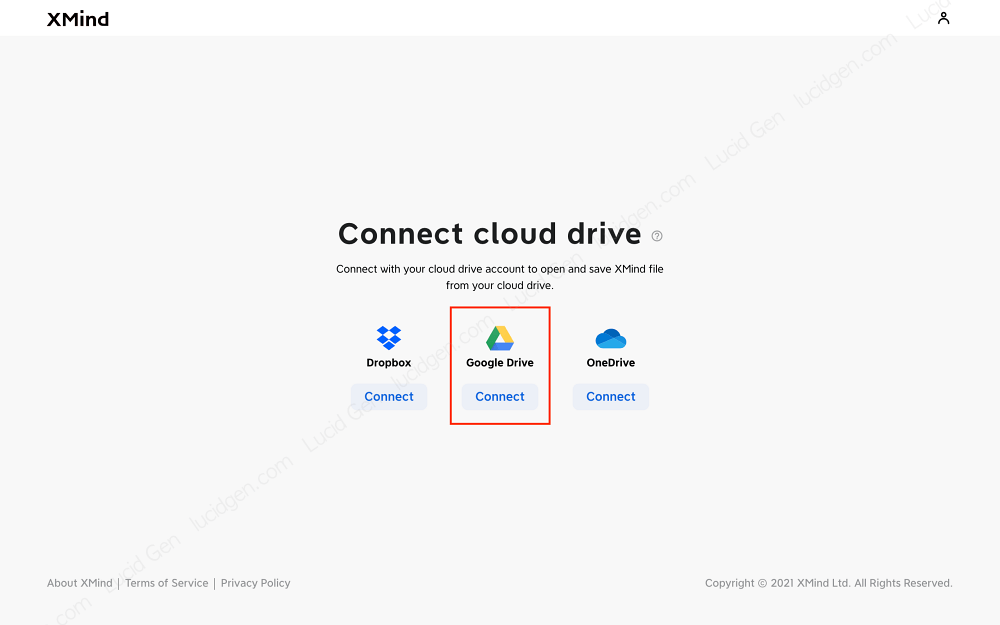
Give XMind some permissions to be able to save mind maps to Google Drive.

Step 4: Click New Map to create a new online mind map.
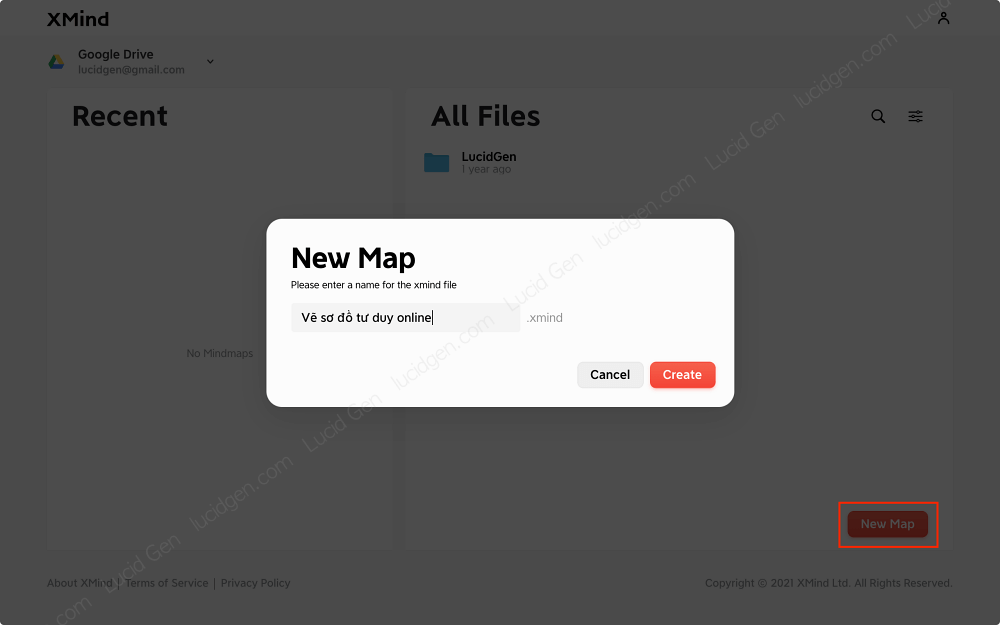
Step 5: Draw your mind map online and choose a template just like on the computer (though it’s not as complete as the desktop app). Click the Save button at the top and XMind will save it to your Google Drive.

Step 6: To share with others, go to Menu > Download to export the mind map as a .xmind file or a PNG image.

If you want to share it as a link, select Menu > Get Share Link.

The difference is that you get a Google Drive file sharing link, not a short link for viewing the mind map directly like in the desktop app.

Final thoughts
I think more and more people will need to make good-looking mind maps, especially office workers, teachers and students. Of the apps I’ve used, XMind is my clear favorite. When I wrote this article (2021), its ratings on the app stores were 4.9 to 5 stars, and most importantly, it has a free version anyone can use. This article is my way of saying thanks to XMind.
How do you like XMind? Please share your thoughts or questions in the comments below!


